Why Your 'Ins Style' Cafe is Failing on Xiaohongshu: The Rise of 'Cream Style' and 'Wabi-Sabi' in 2025
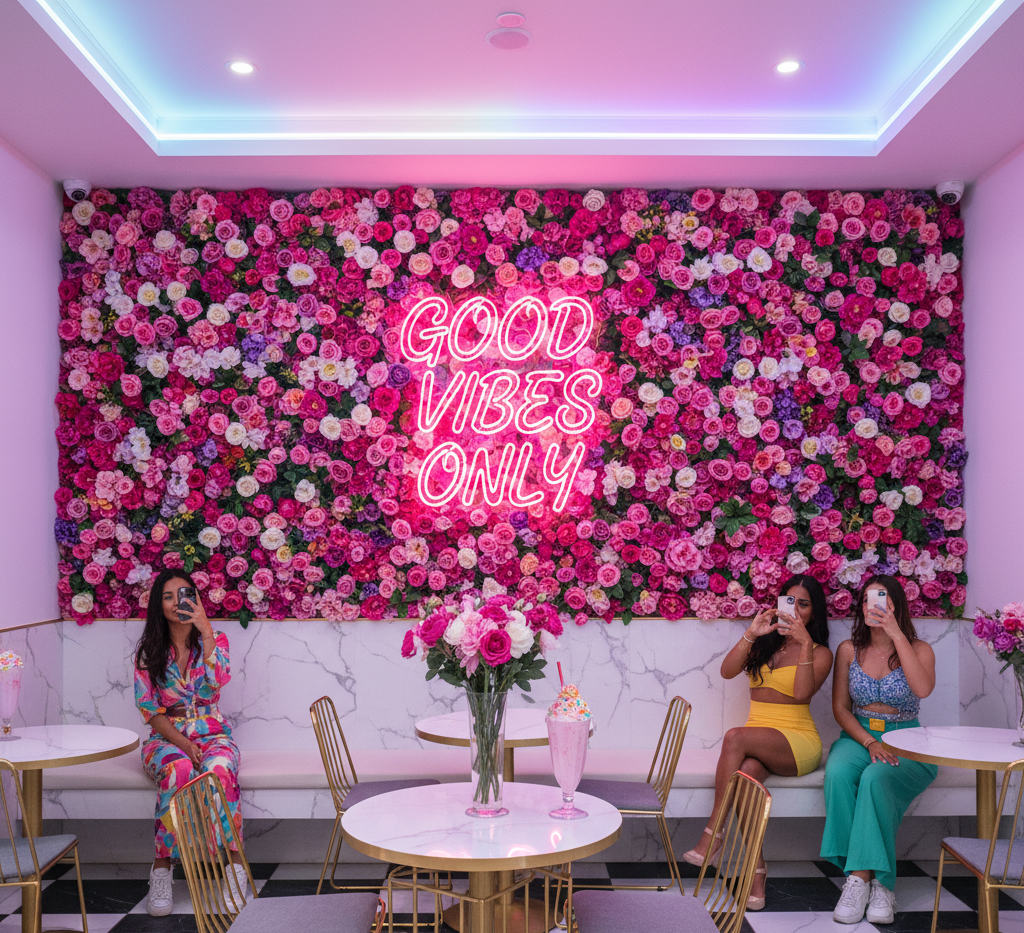
If you walked into a viral Melbourne cafe in 2019, the formula was predictable: neon signs with catchy quotes, artificial flower walls, and bright, high-contrast "pop" colours. This was the "Ins Style" (Ins风) era. It was designed to scream for attention.
In 2025, if your venue still looks like this, you are actively damaging your ranking on Xiaohongshu (RedNote).
The aesthetic preferences of the Chinese consumer have shifted aggressively. The high-saturation "Ins Style" is now frequently tagged as "tacky" (土) or "outdated" by sophisticated urban consumers. In the post-pandemic landscape, the algorithm—and the human psychology behind it—has pivoted 180 degrees.
To rank on the "Explore" feed today, your visual language needs to speak to two new, dominant trends: Cream Style (奶油风) and Wabi-Sabi (侘寂风).
The Death of "Ins Style": A Psychological Shift
Why did the neon signs die? The shift is rooted in a collective desire for "Healing" (治愈) and "Relaxation" (松弛感).
After years of global uncertainty, young Chinese consumers (Gen Z and Millennials) are no longer impressed by loud, performative luxury. They are searching for "Atmosphere" (氛围感)—spaces that feel safe, warm, and intellectually stimulating. They don't just want a photo of a coffee cup; they want a photo that captures a mood.
If your cafe feels "staged," they scroll past. If it feels "lived-in" and "calming," they hit save.
The New Kings of Content
To capture the current wave of traffic, you need to understand the specific architectural vocabularies that are dominating search volumes.
1. Cream Style (奶油风)
Pronunciation: Nǎi Yóu Fēng
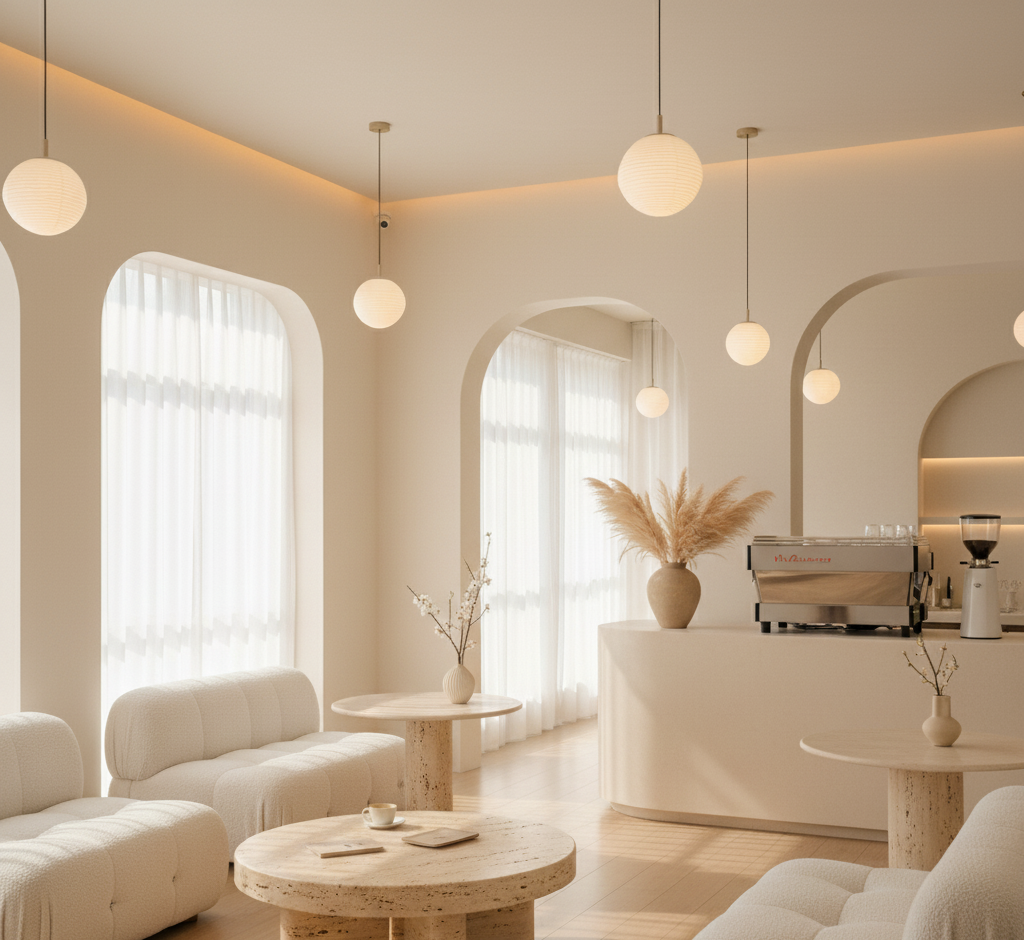
This is currently the highest-volume interior search term on Xiaohongshu. It is the visual equivalent of a warm hug.
The Look: It is defined by "visual softness." Think curved furniture, rounded archways, and a palette of warm beiges, off-whites, and "milk tea" tones. Hard edges are banished.
Key Elements:
Materials: Bouclé fabrics (that knobbly, soft wool texture), travertine stone, and matte paint finishes.
Lighting: Soft, diffused, warm-light (2700K-3000K). Never cool white.
The Marketing Angle: If your cafe has warm wood tones or soft lighting, stop using high-contrast filters. Edit your photos to be softer, lowering the "clarity" and increasing the "warmth."
Keywords for Captions: #CreamStyle, #CozyVibes, #HealingSpace, #MelbourneAfternoonTea.
2. Wabi-Sabi (侘寂风)
Pronunciation: Chà Jì Fēng
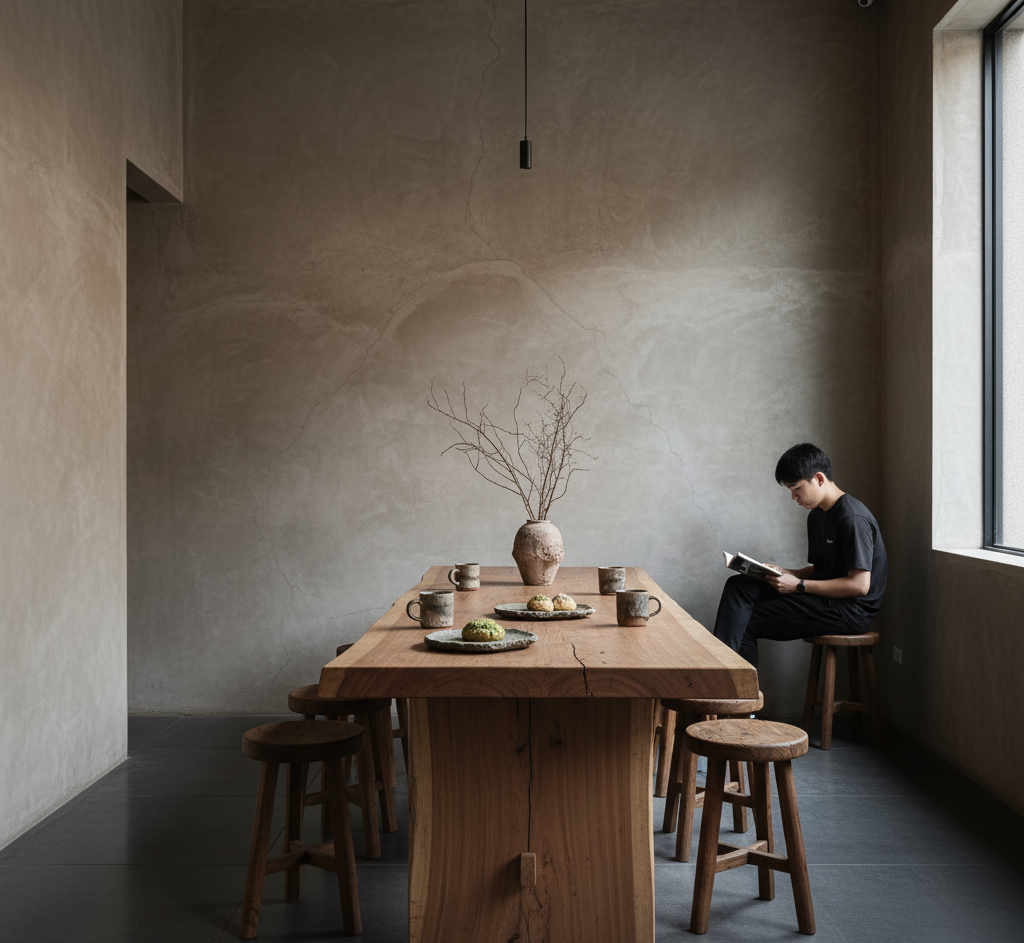
Driven by the desire for mindfulness, this trend celebrates raw textures, imperfection, and the passage of time. It appeals to the "cool," intellectual student crowd and the art-focused tourist.
The Look: Industrial but organic. It’s about finding beauty in the rough.
Key Elements:
Materials: Micro-cement floors, unfinished raw wood, exposed brick, and rough, handmade ceramics.
Decor: Dried branches instead of fresh flowers; vintage timber chairs instead of plastic replicas.
Local Examples: Think of the raw concrete minimalism of Bench Coffee Co. or the industrial precision of Lune.
The Marketing Angle: Do not hide the cracks in the concrete floor; highlight them. Shadows are your friend here. Use natural light to create contrast between dark corners and lit tables.
The "City Walk" Connection
These aesthetics matter because of the "City Walk" (Citywalk) trend.
Chinese tourists are no longer taking buses to major landmarks. They are using Xiaohongshu to map out specific walking routes through neighbourhoods like Fitzroy, Carlton, and Surry Hills. They are "collecting" venues along these routes.
Your venue is a "stop" on their digital map.
The "Doorway" Test: The most important photo for a City Walker is the exterior shot. Does your storefront look like a portal to a "Cream" or "Wabi-Sabi" world?
The Route: If you are near a famous spot (e.g., near Melbourne University or the QVB), you need to tag your location relative to the "City Walk" route.
Actionable Advice: How to Pivot Without Renovating
You don't need to tear down your walls to fix your feed. You can "hack" these trends with styling and photography.
1. Change Your Props
Remove: Bright, artificial flower walls, neon signage, and glossy gold cutlery.
Add: For Cream Style, add dried wheat, beige ceramic vases, and linen napkins. For Wabi-Sabi, add rough stone coasters, handmade pottery cups, and dead branches/driftwood.
2. Shoot for the "Vibe," Not the Macro In 2019, we took close-up photos of the latte art. In 2025, you must zoom out.
The "Atmosphere" Shot: Photograph the light hitting the table. Capture the back of a customer reading a book (with permission/blurred). Show the texture of the wall behind the coffee.
The Composition: Leave "negative space" in the photo. Don't clutter the frame.
3. Adjust Your Lighting If your venue uses cool-white downlights (4000K+), you are fighting a losing battle. Switch to warm bulbs. Chinese influencers often complain that Australian venues are "too dark" or "too yellow," but on camera, warm light equates to "premium."
Are You "Seedable"?
In the world of Xiaohongshu, if a user can't imagine themselves sitting in your cafe and feeling "healed," they won't visit.
We offer a Xiaohongshu Aesthetic Audit. We will review your current venue photos, analyze your lighting and decor, and tell you exactly which "Style Keywords" you should be targeting to get found by the algorithm.
